What Is the Vehicle Data Storage System in India?
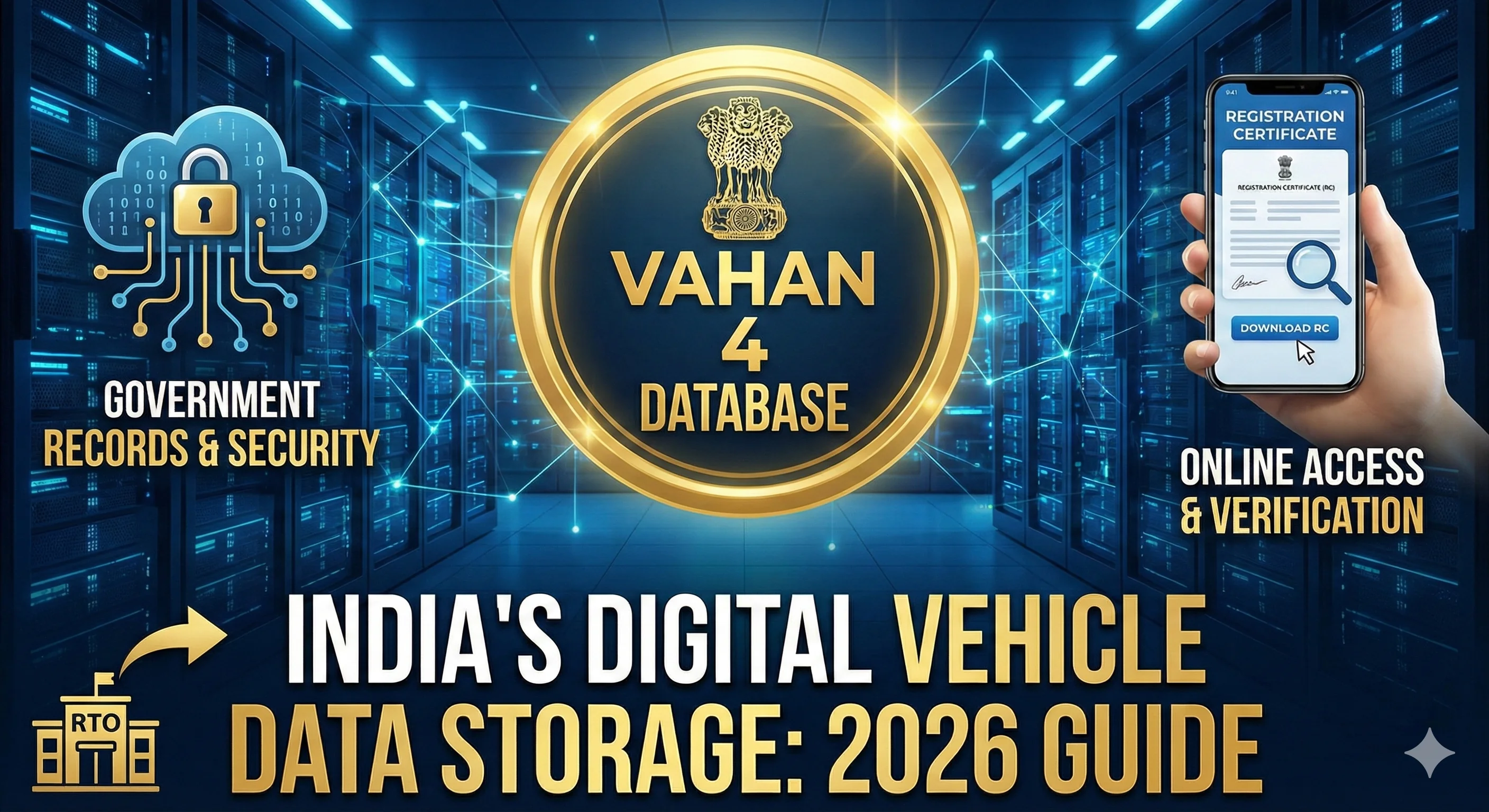
India maintains vehicle records through a centralized digital infrastructure called VAHAN. It is: a national vehicle registry system; managed under Ministry of Road Transport and Highways; connected to all state RTO offices; integrated with insurance and enforcement systems.
Every time you: register a new vehicle; transfer ownership; renew RC; remove hypothecation; update address; apply duplicate RC — the data is updated in this system.
To check your stored vehicle information, use the online RC details verification by vehicle number service here: RC Details
What Is VAHAN 4?
VAHAN 4 is the upgraded version of India's vehicle data platform. It: stores vehicle registration details; maintains owner history; records hypothecation data; tracks fitness certificate validity; syncs insurance database; updates renewal records. All state RTOs update data into VAHAN.
To track your vehicle record updates, use the official RC status tracking portal online by registration number here: RC Status
What Information Is Stored in Government Vehicle Records?
When your vehicle is registered, the following data is stored:
1️⃣ Registration Information
Registration number; registration date; registration validity; RTO code.
2️⃣ Owner Information
Owner name; ownership history; transfer status; address (restricted visibility).
3️⃣ Vehicle Specifications
Engine number; chassis number; fuel type; vehicle class; manufacturer & model.
4️⃣ Financial Details
Hypothecation status; loan information; bank details (secured access).
5️⃣ Compliance Information
Insurance validity; fitness certificate status; permit details (commercial vehicles).
To verify the authenticity of stored vehicle records, use the vehicle registration verification service linked to VAHAN database here: RC Verification
How Does RTO Update Vehicle Records?
When you apply for: RC transfer; RC renewal; duplicate RC; correction in RC; address change — the process is: application submitted; state RTO verifies documents; approval granted; data updated in VAHAN; smart RC generated (if required).
Ownership changes are processed via the online RC name transfer application portal here: RC Transfer. If you need correction, apply through the RC correction online service for name or detail update here: RC Correction
How Insurance Is Linked to Vehicle Data
Insurance companies update policy details into the system. Benefits: real-time verification; prevention of fake insurance; faster challan processing; automatic integration with enforcement systems.
How Enforcement Agencies Use Vehicle Data
Traffic police use handheld devices to: scan number plates; access VAHAN data; verify registration validity; check insurance status; confirm fitness compliance. This digital access helps prevent fraud and vehicle cloning.
To understand number plate structure linked to digital records, read the Indian number plate format and HSRP rules guide here: Indian Number Plate Format
What Is SARATHI System?
While VAHAN stores vehicle data, SARATHI manages: driving licence data; learner licence records; DL renewal; address update. Both systems work together under the Parivahan framework.
How Secure Is the Vehicle Data System?
VAHAN 4 includes: OTP-based verification; secure login access; state-level data control; central monitoring; encrypted database architecture. Public users can only access limited information. Sensitive data is protected under privacy rules.
How to Access Your Vehicle Data Online
To view your official record: visit official vehicle services portal; enter registration number; complete OTP verification; view stored data.
For digital certificate access anytime, use the vehicle RC PDF download service by registration number here: RC Download
What Happens If Data Is Incorrect?
If stored records show: wrong name; incorrect address; loan not removed; ownership mismatch — you must apply for correction. Loan removal can be done via the hypothecation removal from RC service online here: RC Hypothecation Removal
Role of Central vs State Authorities in Data Storage
Central Government: develops VAHAN; maintains system architecture; standardizes data format. State RTO: enters and updates data; verifies applications; approves changes.
To understand authority difference, read the central vs state RTO responsibility explanation guide here: Central vs State RTO Difference
Digital Transformation in 2026
India's vehicle data system in 2026 is: fully digitized; Aadhaar-integrated; smart RC linked; HSRP connected; online status trackable; interstate synchronized. This ensures transparency, fraud prevention, and national-level consistency.
Final Summary
India's vehicle data storage system ensures that every registered vehicle is digitally recorded and centrally maintained. The VAHAN 4 platform connects all RTO offices and stores: registration details; ownership records; insurance validity; fitness compliance; loan status.
This centralized structure makes vehicle verification simple, transparent, and secure. For instant digital access to your official registration certificate anytime, use the vehicle RC download by registration number service available here: RC Download